
What Is MDF?
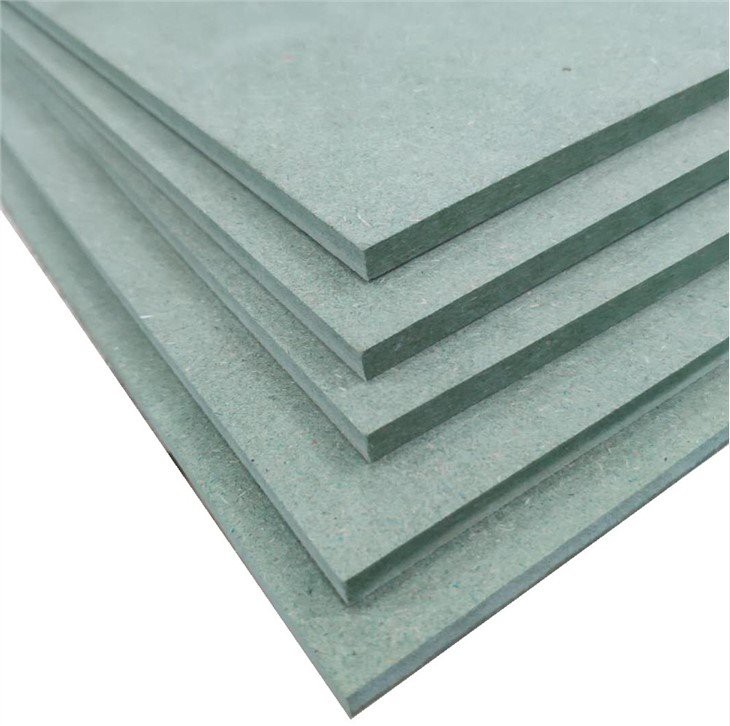
Medium-density fiberboard is an engineered wood made from thin panels of wood fiber, resin and wax. MDF is considered to be an upgrade from plywood and particle board and is used as a real wood alternative. You can see from the edges of these medium-density fiberboards that the engineered wood is a composite of material.
Advantages of MDF
01/
Lower Cost Than Wood
MDF boards will come at a cheaper cost than real wood, and can be laminated to give the appearance of genuine wood products.
02/
Visual Choice
MDF can be stained, painted, or covered in veneers to give the impression of real wood. It is also far quicker to stain and colour than natural wood.
03/
Smooth Appearance
MDF offers a smooth look, without any of the imperfections that can occur with real wood. It also will not fluctuate in size due to temperature to the same extent as wood.
04/
Easy To Drill And Cut To Size
MDF lacks grain, meaning you can easily drill into it without damage occurring. You can also use machines on it to cut it into a wide variety of shapes.
05/
Resistant To Insects
The chemicals used during the manufacturing process will give MDF resistance to insects like termites.
06/
Environmentally Friendly
As MDF is made from discarded parts of the wood manufacturing process, it helps to minimise waste.
-

Melamne Mdf Board/decorative Board
USAGE:BATHROOM/KITCHENROOM/BEDROOM/DINNING ROOM/LAB /OFFICE FURNTURE, Add to Inquiry -
Green MDF
HMR board is made by adding a special resin to the board which gives it extra moisture resistance. Add to Inquiry -
Thin Plain MDF
MDF offers smooth surfaces and a uniformly dense core, which make it suitable for cutting, Add to Inquiry -
18mm MDF
Surface:HPL,polyester,fancy paper,melamine paper,natural Add to Inquiry -
Standard MDF Board 4'*8'
Thickness of mdf : 3mm,5mm,5.5mm,6mm,8mm,12mm,15mm,16mm,17nmm,18mm. Aluminium Color: Brushed color Add to Inquiry -
Plain MDF Board
Density:680-730-880 kgs/m3. Materials:Poplar, Pine. Grade:E0, E1, E2, P2. Add to Inquiry -
Black Laminated MDF
Black laminated MDF is a kind of man-made board made of wood or plant fiber by mechanical Add to Inquiry -
Pre Laminated MDF
Size:1220*1220mm 1220*2440mm Or As Requirement. Thickness:14mm 15mm 16mm 17mm 18mm or As Add to Inquiry -
UV Painting Faced MDF
MDF is generally denser than plywood. It is made up of separated fibres, but can be used as a Add to Inquiry -
Aluminium Faced MDF
Thickness of mdf : 3mm,5mm,5.5mm,6mm,8mm,12mm,15mm,16mm,17nmm,18mm. Aluminium Color: Ral9010 white Add to Inquiry -
White Laminated MDF
USAGE:BATHROOM/KITCHENROOM/BEDROOM/DINNING ROOM/LAB /OFFICE FURNTURE, Add to Inquiry -
HPL MDF
HPL MDF has uniform fiber structure and high bonding strength, so its static bending strength, Add to Inquiry


Why Choose Us
Our Factory
Our company mainly carries on the series deep processing to many kinds of boards, and independently develops the aluminum faced mdf board with backing. This kind of board is waterproof, fireproof and formaldehyde free, which is the first choice for high-end home decoration. Now this kind of plate is very popular in the middle east countries.
Our Services
We can customize products according to the specific requirements of customers and track the problems that may arise during the production process. Deal with the problems of customers in a timely manner and solve them in the use of customers.
Global Shipping
Our products support global shipping and the logistics system is complete, so our customers are all over the world.
After-sale Service
Professional and thoughtful after -sales team, let you worry about us after -sales intimate service, strong after -sales team support.
Types of MDF
Hardboard
It's not exactly MDF, as it's high density, rather than medium. As the name suggests, it's made using higher pressure and temperature compared to regular MDF, yielding a harder board. It has a smooth face and a rough one. Not very thick, suitable for back parts of furniture or drawer bottoms. It's also used to make flooring and boxes.
Waterproof MDF
18mm thick in this case. Contrary to popular belief, the green dye is not what makes it waterproof; it's just used to distinguish it from regular MDF. For use indoors in moist conditions.
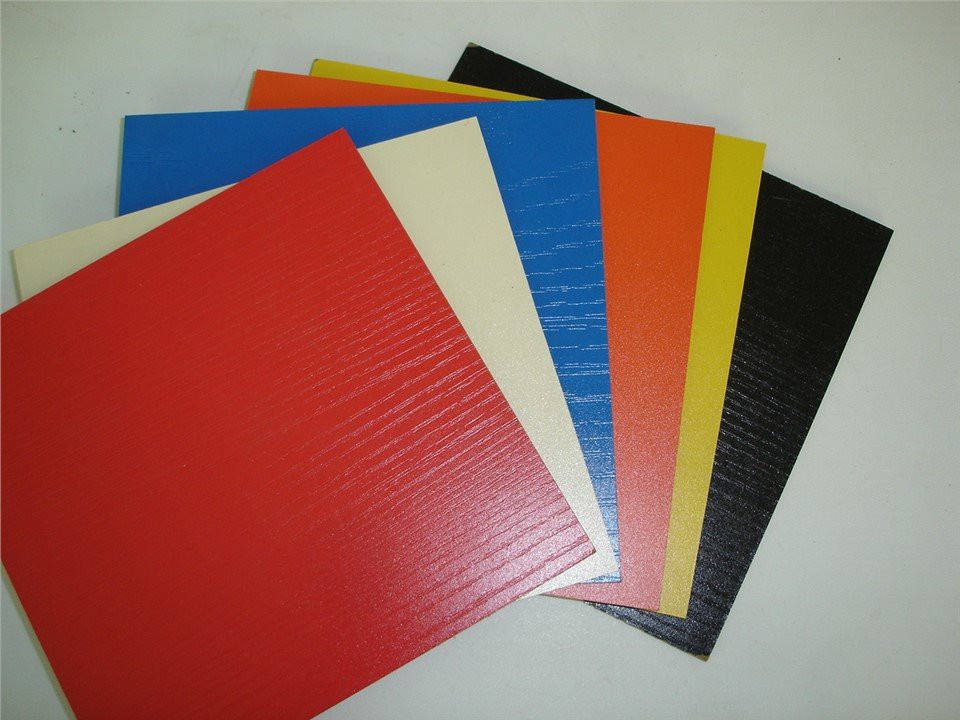
Colored MDF
In recent years, this kind of colored boards have become more popular. They come in lots of colors. Great for furniture and interior decoration.
Normal MDF
The cheapest and most common MDF, this one is 10mm thick. Only suitable for use indoors in relatively moisture-free conditions.
MDF With Melamine On Both Sides
This one is 5mm thick. Easy to find in many thicknesses and colors. The melamine may also imitate other woods. It can be normal or waterproof.
MDF With A Beech Veneer
This one is 16mm thick. Other thicknesses are easy to find, with veneers of all kinds of fine woods. It can be normal or waterproof. Ideal for making furniture. Just like with plywood, veneered MDF is thicker; for example, the 18mm one becomes 19mm thick.
Post-formed MDF
When MDF boards are made, the heat presses can have reliefs that create shapes on the sides of the board, like in this one. It's a piece of plinth with melamine on both sides. Similarly, interior doors and furniture doors are made by covering the board with melamine, pvc or paper.
Application of MDF
Furniture
MDF is commonly used for making furniture, both pre-built and flatpack. This could be shelving, cabinets, or other decorative designs. When joined together, MDF cabinets can be strong enough for general use, though they will offer a lower level of strength than normal wood. For shelving, MDF can sag in extended lengths, so a solid wood underframe will probably be needed. The ease of painting and other decoration methods on MDF will also bring benefits, allowing a wide range of looks to be easily applied.
Flooring
MDF boards can be used as temporary flooring, cut into attractive boards. As MDF has a shorter shelf life than real wood, this is not a permanent installation. It's also worth remembering that MDF and water do not mix. This means that using MDF as flooring within a kitchen or bathroom can be a recipe for trouble, with boards swelling from any spilt water, though water-resistant models are available. Due to its low cost, MDF can be an excellent temporary flooring solution.
Skirting
MDF is used to construct smooth skirting boards for use throughout a house. Due to its lack of grain and defects, MDF can give a pristine look, and can also be coated in a wide range of colours. The ease of sculpting MDF also allows for a variety of skirting board designs.
Window Sills
Due to its smoothness and easy decoration, MDF is popularly used for window sills. MDF can be carved into a rounded shape and painted in colours such as white. When buying window sills made from MDF you should be looking to buy moisture-resistant models, due to the threats of moisture.
Panelling
MDF panels can be used as low-cost wall panelling, giving a suite of style options to your walls. From jacobean panelling with a grid design, to vertical boards, to more experimental looks. MDF can be cut to size and installed on your wall, and painted over to give a beautiful and unique look. Using MDF for wall panelling has grown in popularity in recent years, giving texture to the walls of a home.
Material of MDF
Wood Fibers
MDF is primarily made from refined wood fibers obtained from both softwood and hardwood species. These fibers are often sourced from wood processing residues and by-products.
Resins
Binders or resins are added to the wood fibers to create a strong bond during the manufacturing process. Common resins used include urea-formaldehyde, phenol-formaldehyde, and melamine-formaldehyde.
Additives
Various additives like wax, fire retardants, and anti-fungal agents may be included to enhance specific properties or performance characteristics of MDF.
How to Clean MDF
Regular Dusting
Use a soft, dry fabric or a feather duster to remove dust and detritus from the surface on a regular basis to avoid the accumulation of dust.
Moderate Cleaning Solution
If the MDF is discoloured or has debris accumulation, use a moderate cleaning solution. Mix a little of dish detergent in a container of lukewarm water and immerse a delicate fabric in the solution. Squeeze off the extra water and clean the surface of MDF.
Avoid Excess Moisture
Ensure no excess liquid overflows or penetrates into crevices and dry the surface adequately after cleansing to avoid moisture damage.
Avoid Harsh Chemicals
Do not use harsh chemicals, abrasive cleansers or abrasive scrubbers, since they might damage the surface of MDF.

How to Decontaminate MDF
Identify The Stain
Determine the type of stain you are dealing with, such as water rings, ink stains or other forms of discolouration.
Delicate Cleaning Solution
Mix a delicate cleaning solution using a few drops of dishwashing detergent and mild water. Do not use strong laundry detergents, since they might be abrasive on the MDF surface.
Soft Cloth
Use a soft cloth, such as a microfiber cloth, to delicately sanitise the contaminated area. Soak the cloth in the cleansing solution and rinse away excess water.
Light Scrubbing
If the stain is very stubborn, use a soft bristle toothbrush to delicately exfoliate the area. Avoid using an abrasive toothbrush, since it might leave traces.
Dry The Surface
After cleansing, use a dry fabric made of non-abrasive material, such as cotton or microfiber, to remove any residual surface moisture.
Maintenance Tips for MDF Decorative Panels
Use Furniture Wax
MDF decorative panels can be susceptible to scratches and other types of damage. To protect the surface and restore its shine, apply a thin layer of furniture wax. Use a soft cloth to apply the wax in a circular motion, then buff the surface with another clean cloth. Furniture wax will also help to repel dust and dirt.
Keep Away From Heat
MDF panels are made of wood fibre and resin, which can be damaged by excessive heat. Avoid placing MDF panels near sources of heat, such as radiators, stoves or fireplaces.
Fill Holes And Dents
If there are small holes or dents in the MDF panels, they can be filled with wood filler. Apply a small amount of wood filler to the damaged area and smooth it out with a putty knife. Allow the wood filler to dry completely, then sand the surface of the MDF panel until it is smooth.
Repair Cracks
If the MDF panel has cracks, they can be repaired using wood glue. Apply wood glue to the crack and press the two sides of the crack together. Use a clamp to hold the pieces in place until the glue dries. Once the glue is dry, sand the surface of the MDF panel until it is smooth.
Replace Damaged Panels
If the damage is extensive or the panel cannot be repaired, it may need to be replaced. Remove the damaged panel by unscrewing it from the wall or furniture. Measure the size of the panel and purchase a replacement. Install the new panel in place of the old one.
Paint Or Refinish
If the damage is minor and the surface of the MDF panel is still in good condition, it can be painted or refinished to restore its appearance. Sand the surface of the panel to remove any rough spots or scratches. Apply a coat of primer, then paint or refinish the panel according to your preference.
Process of MDF
Fiber preparation: Wood logs are debarked and chipped into small wood fibers using mechanical or chemical processes.
Fiber refining: The wood fibers are refined and treated to improve their bonding ability and uniformity.
Blending: The refined wood fibers are mixed with resins and additives to create a homogeneous mixture.
Forming: The mixture is then formed into a mat on a forming line. This mat is subjected to heat and pressure to bond the fibers together.
Pressing: The mat is compressed between heated plates in a hydraulic press. High temperature and pressure activate the resin, bonding the fibers into a dense panel.
Cooling and sizing: The compressed panel is cooled and cut into various sizes and thicknesses.
Finishing: The MDF panels may undergo sanding, edge trimming, and surface treatment to achieve the desired smoothness and finish.
Key Properties of MDF
Density
MDF has a relatively uniform and medium density, which contributes to its stability and ease of machining.
Smooth surface
MDF offers a smooth and consistent surface, making it ideal for painting, veneering, and laminating.
Machinability
MDF can be easily cut, drilled, routed, and shaped using standard woodworking tools.
Dimensional stability
MDF has minimal expansion and contraction due to changes in temperature and humidity.
Versatility
It can be used for various applications, from intricate designs to structural components.
Surface finish
MDF holds paints, finishes, and veneers well, resulting in a polished final appearance.
How to Choose a MDF
External Observation
MDF is known for its smooth finish and perfect exterior look without any knots or bubbles compared to particleboard. It also has a uniform colour characteristic which creates additional shine on the surface. You should make all these observations before selecting any particular MDF board. If the MDF board justifies all the above external features, then it is the right one for you.
Check Out The Box Content
As you check the ingredients list before buying any edible products, you should also check the product content before buying MDF. As formaldehyde is used in the production of MDF, it is better to check for its concentration. Higher formaldehyde provides the perfect finish to the boards and thus manufacturers use it for presenting their product better. But you should also know that higher formaldehyde concentration can be harmful. Therefore it is advisable to check the content details of any particular MDF manufacturer before deciding to purchase it.
Quality
The main aim of buying good quality furniture is to ensure that it will not get affected in any diverse situation for a longer time. All the wooden items have to get through several criteria to obtain the standard quality clearance certificate. And it is obvious that you should only buy certified products to guarantee the safety and durability for your home or office furnishings. You can also check the green and red labels on the board which represents that it is fire and water retardant respectively.
Know The Type
MDF comes with various panels for different requirements and different projects, hence they are available in different sizes and thickness. You should understand the types for the reason that it is better to use a particular type of thickness MDF for a particular need.
Precautions for Using a MDF
When using MDF components, the surface of the MDF must always be kept dry and clean. When cleaning the MDF, we cannot wash it with a large amount of water. The MDF material is easily deformed when exposed to water. Be sure to pay attention to this. Then we can use some neutral detergent and warm water to clean the MDF material. After cleaning, the water on the surface layer will be absorbed immediately, so as to prolong the service life of the product.
If the floor is decorated with MDF components, it is recommended that you put a small rug at the entrance to avoid bringing in some fine particles from the outside and damaging the floor. If we are moving the furniture, please do not drag the furniture items on the MDF, carry it properly, and lift the furniture best. If the MDF surface is stained with lipstick, crayon or ink, it can be gently wiped with methanol or acetone.
MDF components should avoid exposure to strong sunlight and long-term baking with high-temperature artificial light sources to avoid premature aging of the dry cracked surface of MDF. The windows should be closed before the rainy season to prevent rainwater from soaking the MDF, and at the same time keep the indoor ventilation, the indoor temperature is conducive to prolonging the service life of the MDF.
In dry winter, we should pay attention to increase the humidity of MDF components. We can regularly use a damp cloth to wipe the surface of the MDF, which can properly increase the surface humidity and effectively prevent the MDF from cracking in a dry environment for a long time.
How to Install The MDF
Select the correct laminated MDF
Typically, the base of a house with a 2 1/4 inch enclosure should be 3 1/4 to 4 1/4 inches. The heavier the crown mold, the larger the substrate.
Evaluate the size of a suitable laminated MDF substrate
The best way to evaluate the proper substrate size is to measure the total wall space that must be applied to the substrate. However, we should ensure an increase of 10% to accommodate any waste.
Measure the required workpiece length
Pass through the entire floor of the room. The length of the piece of laminated MDF required for the measurement must be installed.
Decide to cut
The most common substrate cut is a herringbone angle within 45 degrees in a room. In some cases, the walls of the room have a 45 degree angle. Such a room requires a 22.1/2 degree cut. Regardless of the cut selected, make sure that both parts of the laminated MDF substrate are cut at the same angle. If not completed, the substrate's profile will not match a corner.
Cutting the substrate
After the measurement is completed, the substrate must be cut. In general, the best way to cut a substrate is to use a power saw.
Using a chainsaw
When using an electric chainsaw, do not work on the floor. Instead, use a table as a job. At the same time, place the blocks on both sides of the saw. It helps to maintain the level of the workpiece. Also be careful while keeping the order of the pieces to make sure that no pieces are wrong.
Arranging the footboard
After cutting all the pieces into the appropriate size, use them in an orderly manner. Put them on the wall that must be fastened.
Tightening the foot plate
Now, each piece has to be fixed to the wall. Use a nail gun that is compatible with 1/3/4 inch nails. When you have a piece ready to be nailed, prepare the next one to nail. This may require you to trim a part to get an exact fit.
Use coverage angle
Many carpenters recommend the use of coat angles. These coat angles are used to connect the inner corners.
Fill the corners and joints
Once the substrate is nailed to the wall, the direct seam and the outer corner must be filled with a connected compound, which is designed to be very fast.
Polish the outline
Next, the profile must be sanded with a sand sponge or 80 grit sandpaper.
Finish the work
After polishing the contour, the entire substrate and its corners are latex coated with latex. Once completed, the installation of the laminated MDF is complete.
Our Factroy
Shouguang Roc Industry Co.,Ltd is a specialized manufacturer of such wooden products as Melamine mdf/particleboard, Aluminium faced mdf, UV board, Plywood, Film faced plywood and Blockboard.
Founded in 2000, we have about 280 staff with a registered capital of USD2.000.000 and annual turnover worth USD3,800,000. Our company enjoys independent trade rights and has a wealth of experience in international trade.

FAQ
We're professional mdf manufacturers and suppliers in China, specialized in providing high quality products made in China. If you're going to wholesale cheap mdf in stock, welcome to get free sample from our factory.
laminated mdf panels, Decorative Board, 9 inch mdf skirting board